How to Get Better Cheekbones - Evidence-Based Methods
Cheekbone prominence is primarily determined by zygomatic bone structure, malar fat pad position, and skin thickness. While you cannot change bone structure without surgery, evidence shows face yoga can increase cheek fullness, body fat reduction reveals existing bone structure, and dermal fillers provide the most dramatic non-surgical enhancement. Here is what actually works.
Key Takeaway
Face yoga builds muscle volume (20 weeks, 30 min/day), body fat reduction reveals bone structure, and dermal fillers deliver the most dramatic non-surgical results. Combine all three for maximum impact.
What Creates Prominent Cheekbones?
Cheekbone definition depends on five anatomical components working together:
Zygomatic bone structure
the genetic foundation. This is fixed and determines your baseline cheekbone projection.
Malar fat pad volume and position
soft tissue that sits over the cheekbone and contributes to fullness in the mid-face.
Deep Medial Cheek Fat (DMCF)
crucial for underlying cheek projection. This deep fat pad provides structural support beneath the surface.
Buccal fat volume
the fat pad in the lower cheek area. Less buccal fat generally means more visible cheekbone contrast.
Skin thickness and elasticity
thinner, tighter skin displays underlying bone structure more clearly.
Triangle of Youth
The "Triangle of Youth" concept describes an inverted triangle with its base at the cheekbones and its apex at the chin. High cheekbones are the structural support of this youthful triangle. When this triangle is maintained, the face appears lifted, defined, and balanced.
How to Make Your Zygomatic Bones More Prominent
"Cheekbone" is the everyday word for the zygomatic bone and its arch - the bar of bone running from under the eye socket back toward the ear. Searches for "how to grow your zygomatic bone" deserve a straight answer: in an adult, the bone itself does not grow, widen, or gain mass from exercise, chewing, mewing, or supplements. Skeletal growth plates close by the early twenties, and no peer-reviewed study shows adult zygomatic remodeling from any non-surgical practice. What you can change is everything layered over the bone - and that is what makes the same skeleton read as "prominent" or "flat".
Malar fat pad and skin
Changeable: YesLower overall body fat thins the layer over the arch; the projection underneath becomes visible. The highest-leverage change for most people.
Buccal (lower-cheek) fullness
Changeable: YesFat loss reduces the fullness below the arch, which increases the light-shadow contrast that reads as a defined cheekbone.
Soft-tissue volume over the arch
Changeable: Yes (clinical)Hyaluronic-acid filler placed on the zygomatic arch adds projection for 12-18 months. The most direct non-surgical change, and the only one that adds rather than reveals.
Skin quality and lighting
Changeable: YesRetinoids, sunscreen and hydration sharpen the way light falls across the arch; contour makeup fakes the shadow directly.
The zygomatic bone itself
Changeable: NoFixed in adults short of malar implants or osteotomy - surgical, specialist territory, not a routine cosmetic tweak.
Mewing, chewing, face pulling
Changeable: NoNo evidence of bone change. Masseter growth from chewing adds bulk lower on the jaw, which can make the mid-face look narrower by comparison, not wider.
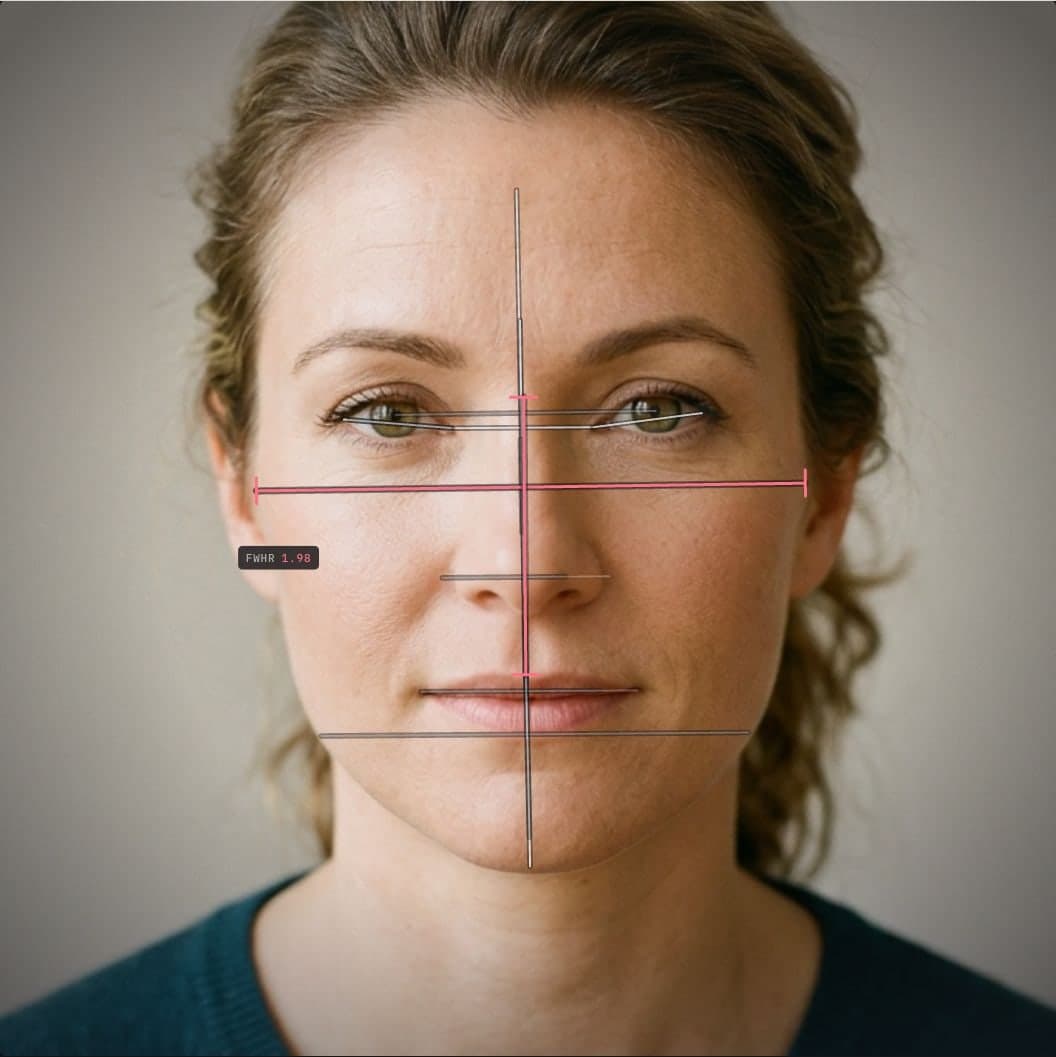
A quick way to see where your own mid-face sits: the cheek-to-jaw width ratio and the bizygomatic (cheekbone-to-cheekbone) width are two of the proportions our free facial ratios tool measures from one photo, placed against percentile bands from 14,144 scans.
Measured examplesynthetic subject · 478 landmarks
How Do Cheekbones Change With Age?
Aging affects cheekbone appearance through two simultaneous processes:
Deep fat pads atrophy
they lose volume, reducing the fullness that supports cheekbone projection.
Superficial fat pads descend
they sag downward under gravity, pulling volume away from the cheekbone area toward the lower face.
The result is a sagging appearance and the formation of nasolabial folds. The Triangle of Youth "inverts" - the base moves to the lower face as volume shifts downward. This happens regardless of bone structure, which is why even people with naturally prominent cheekbones notice diminished definition with age.
Can Facial Exercises Improve Cheekbones?
Yes - with caveats. A study of women aged 40-65 found that a 20-week program of daily facial exercises (30 minutes per session) led to visible increases in both upper and lower cheek fullness.
Clinical Evidence
20 weeks
30 min/day
Visible increases in upper and lower cheek fullness
Think of it as the "beachball" analogy: as facial muscles grow through resistance training, they inflate the skin from below, creating a tighter, more defined appearance. The muscle itself acts as a natural filler, pushing outward against the overlying skin and fat.
A separate study on intensive face yoga found improvements in facial muscle tonus, stiffness, and elasticity in middle-aged women, supporting the idea that consistent facial exercise creates measurable changes in tissue quality.
Limitation: results require consistent daily practice for months. The improvements are real but modest compared to dermal fillers. Face yoga works best as a long-term maintenance strategy rather than a quick fix.
Does Weight Loss Make Cheekbones More Defined?
Yes - and it is often the single biggest factor. Reducing buccal and subcutaneous fat reveals underlying bone structure that was always there but hidden beneath soft tissue.
Men
12-15%
body fat for defined cheekbones
Women
20-22%
body fat for defined cheekbones
Individual fat distribution, determined by genetics, plays a major role in how much facial fat you carry relative to the rest of your body.
Caution: excessive weight loss can cause facial volume loss that actually reduces cheekbone appearance. When you lose too much facial fat, the face takes on a gaunt, hollow look - the opposite of the youthful fullness that makes cheekbones attractive. The goal is to find the body fat percentage where bone structure is visible but soft tissue volume is preserved.
Does Gua Sha Actually Sculpt Cheekbones?
Partially - but temporarily. Research shows gua sha increases microcirculation by 400%, with effects lasting over 25 minutes post-treatment. It promotes lymphatic drainage, reducing puffiness and creating a temporary "snatched" appearance that reveals more of the underlying bone structure.
Microcirculation Increase
400%
Effects lasting over 25 minutes post-treatment
A comparative study found both facial rollers and gua sha improved facial contour, muscle tone, and skin elasticity. There is evidence that regular practice maintains these benefits and may contribute to improved tissue quality over time.
However: there is no evidence that manual scraping permanently reshapes underlying bone or fat distribution. Gua sha is best used as a daily practice for temporary de-puffing - not as a permanent sculpting tool.
What Are the Best Non-Surgical Treatments for Cheekbone Enhancement?
Treatment Comparison
| Treatment | How It Works | Evidence Level | Duration | Expected Results |
|---|---|---|---|---|
| Dermal fillers (CaHA) | Adds volume to zygomatic area | Strongpeer-reviewed | 12-18 months | Most dramatic non-surgical option; CaHA in the zygomatic region also improves nasolabial folds by up to 13.5% |
| Dermal fillers (HA) | Hyaluronic acid adds volume | Strong | 6-12 months | Reversible, natural-looking enhancement |
| Microcurrent devices | Electrical stimulation for muscle toning | Limited | Temporary | Inconsistent data, requires ongoing use |
| Face yoga | Muscle hypertrophy from resistance exercises | Moderateone key study | Permanent with maintenance | Modest but real improvements in cheek fullness over 20 weeks |
| Gua sha / facial massage | Lymphatic drainage, circulation boost | Moderate | Hours (temporary) | Temporary de-puffing, +400% microcirculation |
What Lifestyle Changes Enhance Cheekbone Appearance?
Hydration
dehydration causes facial puffiness that masks bone structure. Adequate water intake keeps tissues tight and reduces bloating.
Sodium reduction
high sodium intake leads to water retention and a puffy face that obscures cheekbone definition.
Sleep quality and position
sleeping face-down causes morning puffiness. Elevating your head slightly promotes overnight fluid drainage.
Reduce alcohol
alcohol causes facial bloating and inflammation, both of which diminish cheekbone visibility.
Anti-inflammatory diet
reducing processed foods and increasing omega-3 intake helps minimize chronic facial swelling.
Can Mewing Improve Cheekbones?
Claims exist about mewing (maintaining proper tongue posture against the palate) affecting midface development and cheekbone appearance. However, the scientific evidence for adult bone remodeling from tongue posture is weak. The British Orthodontic Society states there is no peer-reviewed evidence that mewing changes facial bone structure in adults. While proper tongue posture is beneficial for breathing and swallowing, relying on it for cheekbone enhancement is not evidence-based. See our mewing results guide for a full analysis.
What Results Can You Realistically Expect?
Methods ranked by impact, from most to least dramatic:
Results Timeline
| Method | Timeline | Impact | Realism of Results |
|---|---|---|---|
| Dermal fillers | Immediate | Dramatic, visible same day, lasts 6-18 months | |
| Body fat reduction | 2-6 months | Significant if you carry facial fat | |
| Face yoga | 4-5 months daily | Modest but measurable increase in cheek fullness | |
| Gua sha | 5-30 minutes | Temporary de-puffing, no permanent change | |
| Makeup contouring | 10 minutes | Instant visual effect, non-permanent |
Common Myths About Cheekbone Enhancement
"Face yoga can reshape bone structure"
FALSEFace yoga builds muscle volume beneath the skin, which can improve cheek fullness and definition. It does not reshape bone.
"Mewing lifts your cheekbones"
UNPROVENUNPROVEN in adults. No peer-reviewed research demonstrates that tongue posture alters zygomatic bone position in adult subjects.
"Facial rollers permanently sculpt your face"
FALSERollers provide temporary lymphatic drainage and reduce puffiness, but they do not permanently change bone or fat distribution.
Analyze your facial proportions with our free Face Shape Detector to understand your unique bone structure, or check your Facial Symmetry Score to see how your features balance across both sides of your face, or get a facial analysis that measures every proportion at once.
Try it on your own face
Stop reading. Start seeing - these tools turn this guide into a result.
Procedure Preview - Cheek Volume
1 tokenAI simulation of mild cheek filler. See lifted, fuller cheekbones before consulting a provider.
Custom Studio
1 tokenCombine makeup + outfit + hair changes that make your cheekbones read more clearly in photos.
Glow-Up Pack
5 tokens5-image pack - your polished self plus optimised hair, grooming, skin, and styling that emphasises your cheek structure.
Face Shape Detector
FreeDifferent face shapes flatter different cheekbone treatments - start by knowing yours.
Related Guides
How to Improve Your Jawline
exercises, body fat, and clinical treatments
How to Improve Facial Symmetry
exercises, habits, and clinical treatments
Face Shape and Hairstyle Guide
best styles for every face shape
Mewing Results: What Science Says
honest analysis of tongue posture claims
Collagen Supplements for Face
oral collagen for skin elasticity and cheek fullness
Facial Exercises for Symmetry
targeted face yoga routines with research evidence
Test Your Golden Ratio →
Free AI-powered facial proportions analysis