Mewing Before & After: Realistic Results Timeline at 1, 6 and 12 Months
Mewing - the practice of holding your tongue flat against the roof of your mouth - has limited scientific evidence for changing facial structure in adults. Below is a realistic month-by-month timeline of what you can and cannot expect, followed by what peer-reviewed research says about every major claim.
Key Takeaway
Mewing has limited evidence for changing facial structure in adults.
Mewing Before & After: The Realistic Timeline
Social media timelines promise visible jawline changes in weeks. The evidence supports a much more modest arc - and most of what people notice early is posture, not bone. Here is what each stage realistically looks like for an adult, based on the research covered in detail further down this page.
1 Month of Mewing: What to Expect
No structural change - bone remodeling does not produce visible results in four weeks at any age. What you may genuinely notice: greater awareness of tongue position, easier nasal breathing if you were a habitual mouth breather, and better head-and-neck posture. Posture alone can make the jawline appear slightly more defined in photos, which is where most 1-month "before and after" images come from - along with lighting, angle, and expression differences.
6 Months of Mewing: What to Expect
Still no measurable skeletal change in adults. The midpalatal suture begins fusing in the mid-teens and is typically fully ossified by the mid-twenties, so adult tongue pressure cannot meaningfully widen the maxilla. Functional benefits - reduced snoring, consistent nasal breathing, better swallowing mechanics - are plausible and supported by evidence at this stage. Any dramatic 6-month transformation photo is far more likely explained by weight loss, facial hair, puberty (in teens), or photography than by tongue posture.
12 Months of Mewing: What to Expect
The studies that exist report only ~2mm of adult palate-width change - below the threshold anyone would notice in a mirror, and often without long-term stability. No randomized controlled trial has ever documented visible facial restructuring from a year of mewing in adults. If your face looks different after 12 months, the honest first suspects are body-fat change, aging, posture, and grooming. In growing children the picture is different - tongue pressure during swallowing can influence development while sutures are open - but that is orthodontist territory, not a self-administered program.
The bottom line for the timeline: expect functional benefits (nasal breathing, posture) within weeks, and do not expect visible bone change at any point as an adult. The sections below unpack the science behind each of these claims.
What Is Mewing?
Mewing is named after Dr. Mike Mew, a British orthodontist who promotes a discipline he calls “orthotropics.” The practice involves resting the entire tongue against the palate, maintaining sealed lips, and keeping the teeth in light contact. It is part of a broader philosophy that modern “soft” diets and habitual mouth breathing cause the face to lengthen vertically over time, resulting in a less defined jawline and recessed midface.
Proponents claim that consistent tongue posture can expand the maxilla (upper jaw), reshape the face, improve nasal breathing, and enhance jawline definition. These claims have gained significant traction on social media, particularly among young men seeking non-surgical facial improvement.
What Is Orthotropics vs. Orthodontics?
Understanding the distinction between these two approaches helps contextualize where mewing sits in the broader landscape of facial development.
| Aspect | Orthodontics | Orthotropics (Mew) |
|---|---|---|
| Approach | Teeth alignment, often with braces or aligners | Facial growth guidance through oral posture |
| Core belief | Genetics primarily determine facial structure | Oral posture and environment shape the face |
| Evidence base | Extensive peer-reviewed literature | Limited; mostly case reports |
| Professional status | Mainstream medical specialty | Not recognized by major orthodontic bodies |
What Does the Science Say About Mewing?
The theoretical basis: Wolff’s Law
Wolff’s Law states that bone adapts to the mechanical loads placed upon it. In growing children, tongue pressure during swallowing - which occurs 500 to 1,200 times daily - can exert up to 5 pounds of force on the nasomaxillary complex. This force can theoretically stimulate palate expansion and forward midface growth in children whose sutures have not yet fused.
The clinical reality
Bone remodeling is significantly slower in adults. The midpalatal suture, which allows the maxilla to widen in children, begins fusing in the mid-teens and is typically fully ossified by the mid-twenties. Adult gains in palate width - approximately 2mm in the studies that exist - often lack long-term stability. No randomized controlled trials have tested mewing specifically. The available evidence is limited to case reports and retrospective studies, which cannot establish causation.
What Does the British Orthodontic Society Say About Mewing?
There is no scientific evidence to suggest patients can change the shape of their face… by holding the tongue in a closed position.
The following table summarizes how different groups view the evidence around mewing and tongue posture.
| Perspective | Position |
|---|---|
| Orthotropics (Mew) | Modern soft diets and mouth breathing cause facial lengthening; tongue posture can reverse this |
| Mainstream orthodontics | Facial structure is a complex mix of genetics and growth; skeletal changes in adults generally require surgery |
| British Orthodontic Society | No evidence that tongue posture changes facial shape, improves breathing, or increases intelligence in adults |
| Scientific evidence | Bone remodeling significantly slower in adults; ~2mm palate gains often lack long-term stability |
What Happened to Dr. Mike Mew?
In 2024, Dr. Mike Mew was struck from the dental register in the United Kingdom following allegations of “inappropriate and misleading” treatment recommendations. The General Dental Council found that his advice posed risks to pediatric patients.
This does not automatically invalidate every idea within orthotropics. However, it significantly undermines the authority behind the claims, particularly given that the concerns centered on patient safety rather than academic disagreements.
Can Mewing Change Your Face as an Adult?
- Improved nasal breathing (correct tongue posture promotes mouth closure)
- Reduced snoring
- Better swallowing mechanics
- Improved posture awareness
- Minor improvements in tongue-palate contact over years
- Slight posture-related changes to perceived jaw position
- Significant maxillary expansion
- Visible cheekbone changes
- Dramatic jawline reshaping
- Forward growth of the midface
Why Do Before-and-After Photos Look Convincing?
Many mewing transformation photos circulating online are misleading due to common confounding factors that are rarely controlled for.
Weight loss and body fat reduction
the single biggest factor in jawline visibility changes
Natural aging and puberty completion
especially relevant in teens, where facial bones are still developing regardless of tongue posture
Lighting and angle differences
overhead lighting vs. front-facing light dramatically alters perceived bone structure
Facial hair changes
a beard or stubble can completely redefine the jawline silhouette
Improved posture
which genuinely does affect perceived jaw position by changing head-neck alignment
Photography focal length
wide-angle lenses distort facial proportions significantly compared to telephoto lenses
How to take a before photo that a later "after" can actually be compared to
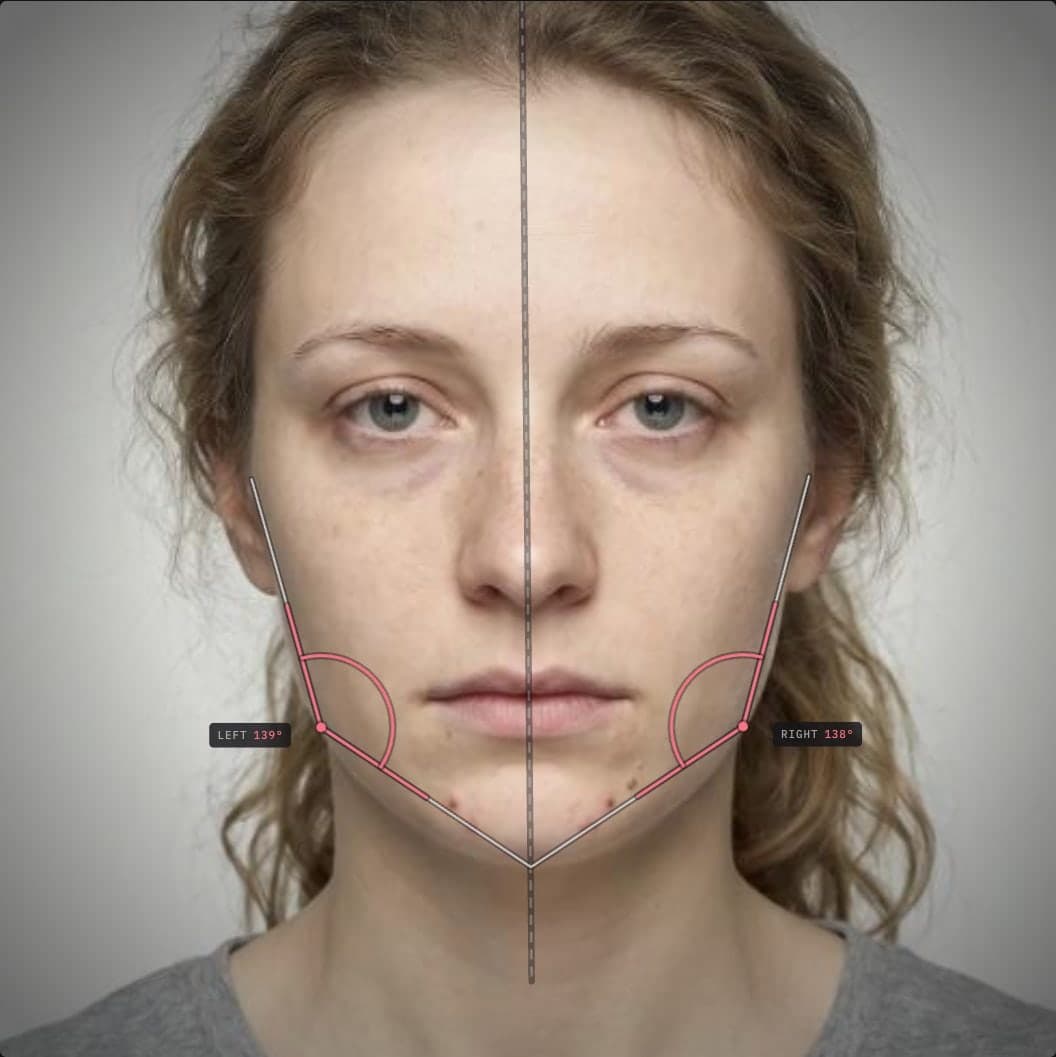
If you want to know whether anything changed, control the six confounders above and measure instead of eyeballing: same camera distance, eye-level lens, neutral expression, ears visible, front light, and a number you can re-take. The jaw-corner angle is the measurement mewing claims to move, so it is the one to baseline.
What Are the Risks of Mewing?
- ×TMJ issues from incorrect technique or excessive force against the palate
- ×Jaw pain and headaches from sustained, unnatural muscle tension
- ×Worsened bite alignment if incorrect tongue posture applies asymmetric pressure
- ×Opportunity cost - time and attention spent on mewing instead of pursuing evidence-based treatments
- ×Psychological impact of false expectations, particularly for young people who may experience frustration or body image distress when results do not materialize
What Actually Works for Facial Structure Improvement?
If you are looking for measurable changes to jawline definition or facial proportions, the following approaches have stronger evidence behind them.
Body fat reduction
the most impactful change for jawline visibility. Submental fat (under the chin) obscures bone structure regardless of skeletal shape.
Dermal fillers
hyaluronic acid or calcium hydroxylapatite injections at the mandibular angle provide targeted contouring for 12 to 18 months.
Orthodontic treatment
braces or clear aligners correct bite and alignment issues, which can meaningfully change facial profile.
Orthognathic surgery
for significant skeletal discrepancies, surgical repositioning of the jaw is the only approach with consistent, permanent results.
Good posture habits
head and neck posture genuinely affects how your jaw and chin appear, and this is the one element of mewing philosophy that holds up.
For a deeper look at these options, read our evidence-based jawline improvement guide.
Understand your starting point first
Before exploring any improvement method, analyze your facial proportions with our free AI tools. Our face shape detector and symmetry analyzer give you objective measurements so you can track real changes - not lighting tricks. For every measurement at once, run the full facial analysis.
Try it on your own face
Stop reading. Start seeing - these tools turn this guide into a result.
Time Machine
2 tokensSee yourself 10 years older - a more honest preview than what mewing claims to deliver in 6 months.
Jawline Rating
FreeBaseline gonial-angle measurement. Track if mewing actually changes anything over time.
Procedure Preview
1 tokenIf you want a faster jawline change, see what jaw filler or chin sculpting could look like.
Custom Studio
1 tokenStack age + grooming + outfit changes to see your face from a different angle.
Popular jaw-training gear
Affiliate links - we may earn a commission at no extra cost to you.
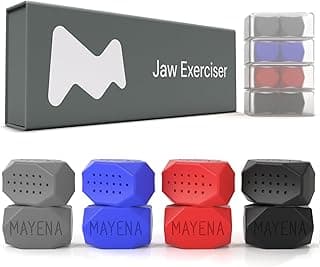
Mayena Jaw Exerciser Classic | 4 Set Silicone Jawline Exercisers | Powerful Jaw Trainer & Jawline Shaper | Strengthens Facial Muscles & Defines the Jawline
Shop on Amazon →
Chios Mastiha Pack 25gr (0.88oz) Medium Tears - 100% Pure Mastic Gum from Mastic Growers - Natural Raw Resin for Facial Toning & Jawline - Sugar-Free, Keto
Shop on Amazon →Related Guides
How to Improve Your Jawline
Evidence-based methods that actually work
How to Get Better Cheekbones
Face yoga, fillers, and lifestyle changes
How to Improve Facial Symmetry
Exercises, habits, and clinical treatments
Face Shape and Hairstyle Guide
Best styles for every face shape
Facial Exercises for Symmetry
What JAMA research shows about face yoga