Beard Styles for Your Face Shape
The balance principle barbers actually use - for all six face shapes
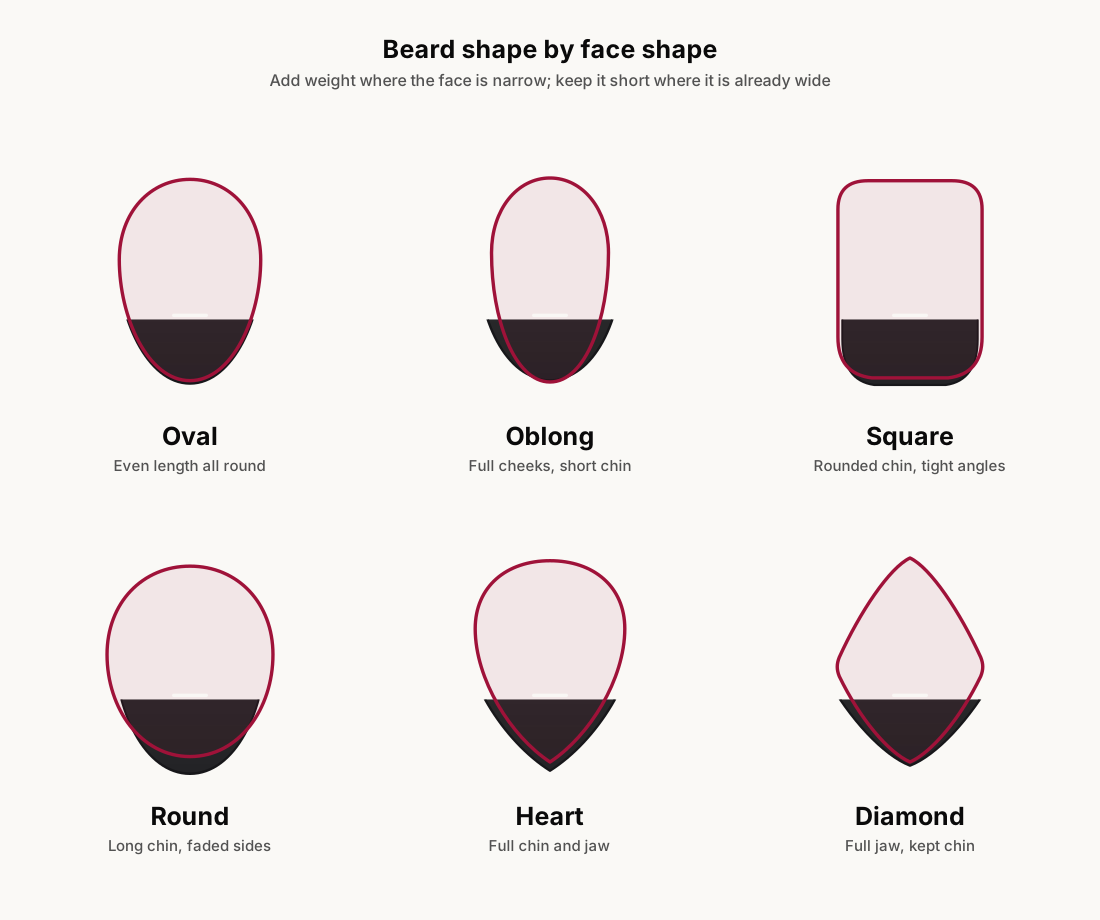
A beard is the fastest way to reshape how your lower face reads - it can add length, add width, or soften angles depending on where you put the volume. Which of those you want depends entirely on your face shape. The principle: put fullness where your face is narrow, keep it trimmed where your face is wide, and never stack more of what you already have.
Don't know your face shape? Detect it free with AI from one photo - then come back and jump to your section.
Best Beard Styles for a Round Face
The goal: Add length, not width. The beard's job is to build a vertical line the face doesn't have.
Short boxed beard with length at the chin
Extends the chin downward while the trimmed cheeks keep width in check.
Goatee / extended goatee
Concentrates visual weight at the chin, lengthening the whole face.
Van Dyke
The pointed chin emphasis is the strongest lengthening move short of a full ducktail.
Skip: Full rounded beards and mutton chops - anything that adds bulk at the cheeks makes a round face rounder.
Best Beard Styles for a Square Face
The goal: Soften the corners. The jaw already provides structure; the beard should round it slightly, not sharpen it.
Rounded full beard, kept short
Softens the jaw's angles without hiding the bone structure that's working for you.
Circle beard
The curved outline counters the face's straight lines.
Light stubble
Adds texture while leaving the strong jawline visible - the low-maintenance win for square faces.
Skip: Sharp, squared-off beard lines and flat-bottomed full beards - they stack a second box on an already angular jaw.
Best Beard Styles for a Oval Face
The goal: Maintain, don't correct. Balanced proportions mean nearly every style works - choose by growth pattern and maintenance appetite.
Classic full beard
Oval faces can carry length and fullness without distorting proportions.
Stubble (any length)
Effortless and proportion-neutral.
Short boxed beard
Clean and professional, keeps the natural balance visible.
Skip: Nothing is off-limits geometrically - just avoid extremes that create a new imbalance, like a very long ducktail on a shorter face.
Best Beard Styles for a Heart Face
The goal: Build up the lower third. A wider forehead tapering to a narrow chin wants visual weight at the jaw.
Full beard with fuller cheeks
Adds the jaw width the face lacks, balancing the forehead.
Garibaldi (rounded, fuller)
Maximum lower-face volume - the strongest counterweight to a wide forehead.
Chin strap into light beard
Defines and widens the jawline with less maintenance than a full beard.
Skip: Thin goatees and pointed chin styles - they narrow the chin further and exaggerate the taper.
Best Beard Styles for a Oblong Face
The goal: Add width, never length. A longer face wants fullness at the sides and a flat bottom, not a pointed extension.
Full beard with fuller sides, trimmed flat at the chin
Widens the face while the flat bottom refuses to add length.
Mutton chops / heavy sideburns
Pure side-volume - the inverse of what a round face needs.
Horseshoe or wide mustache styles
Adds a horizontal line that visually shortens the face.
Skip: Ducktails, long goatees, and any chin-length emphasis - they stretch an already long face.
Best Beard Styles for a Diamond Face
The goal: Fill the jaw and soften the cheekbone peak. Narrow chin + wide cheekbones want lower-face fullness.
Full beard, fuller at the jaw
Widens the narrow lower third so the cheekbones stop being the face's widest point.
Chin curtain
Traces and thickens the jawline specifically.
Balbo
Adds structured chin coverage while keeping the look deliberate.
Skip: High, sharp cheek lines on a trimmed beard - they point straight at the cheekbones you're trying to de-emphasize.
Frequently Asked Questions
What beard style is best for my face shape?
The rule barbers use is balance: add visual length to round faces (chin emphasis, trimmed cheeks), width to long faces (fuller sides, flat bottom), softness to square jaws (rounded lines, stubble), and lower-third fullness to heart and diamond shapes (fuller jaw coverage). Oval faces can wear nearly anything. If you don't know your face shape, the free AI detector linked below measures it from one photo in seconds.
Should my beard match my haircut?
They should work on the same problem, not fight each other. A round face pairing height-on-top hair with a chin-lengthening beard doubles the vertical effect; an oblong face doing the same doubles the stretching. Decide the goal from your face shape first - lengthen, widen, or soften - then pick hair and beard that both push in that direction.
What if my beard grows in patchy?
Work with the density you have rather than forcing a style that needs coverage you can't grow. Patchy cheeks with decent chin growth suit goatee-family styles (goatee, Van Dyke, Balbo) - which happen to be the right call for round faces anyway. Uniform stubble is the most patch-tolerant style and suits square and oval faces especially well. Give any new style 4–8 weeks of growth before judging it.
How do I find out my face shape?
Measure forehead width, cheekbone width, jaw width, and face length, then compare the ratios - or skip the tape measure and use the free AI face shape detector, which maps 478 facial landmarks from one photo in your browser and tells you your shape plus a runner-up if you're near a boundary.