The Best Haircuts for a Diamond Face
A diamond face is widest at the cheekbones, with a narrow forehead above and a narrow, often angular chin below - a face that tapers at both ends. The high, sculpted cheekbones are the signature feature, and it is one of the rarer shapes. The tell that separates it from a heart face is the forehead: a heart is widest up top, while a diamond's forehead is one of its two narrow points.
That gives a diamond a styling job no other shape has - a two-front one. You are building width at the narrow forehead and temples and at the narrow jaw and chin at the same time, while keeping fresh volume off the cheekbones. Done well, the face reads closer to a balanced oval. The aim is not to hide your cheekbones, which are an asset, but to stop them being the only wide point.
In practice, fringe and below-the-cheekbone volume flatter a diamond, while anything that bares the narrow forehead and chin or stacks fullness at mid-face works against it. Bangs are unusually powerful here because the forehead needs breadth, not coverage. Chin-length and longer cuts that flare at the jaw add the lower width, and soft side-swept texture frames the cheekbones instead of widening them.
The rule
Add width at the narrow forehead and chin while keeping volume off the cheekbones - a diamond's balancing act works on two fronts, not one. Not sure this is your shape? Try our free hairstyle finder first - it detects your shape and lists your matched cuts.
Best Haircuts for Diamond Faces - Women
Chin-length bob with curtain or side-swept bangs
Does the diamond's two-front job in one cut: the bangs add breadth across the narrow forehead while the chin-length ends build width at the jaw, so the cheekbones stop being the only wide point.

Collarbone lob with face-framing layers that start below the cheekbone
Keeping the shortest face-framing pieces below ear level drops the soft volume onto the jaw instead of the cheek - exactly where a diamond is narrowest - for a longer option that still balances the mid-face.
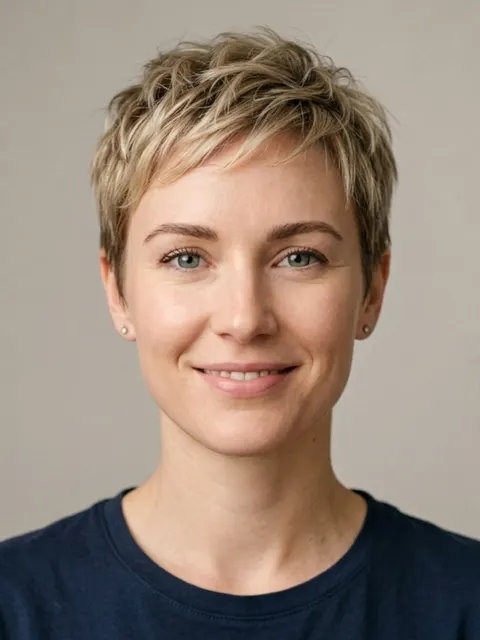
Textured pixie with crown and temple volume
Piecey volume lifted at the crown and pushed out at the temples broadens the narrow upper face, while short sides keep bulk off the cheekbone. Style it textured and forward, never slicked flat.

Soft curtain bangs added to any length
Bangs are a diamond's highest-leverage move: a wide, soft fringe fills the recessed temples and narrow forehead. Unlike a heart face, you want them broad and framing - not covering and reducing.
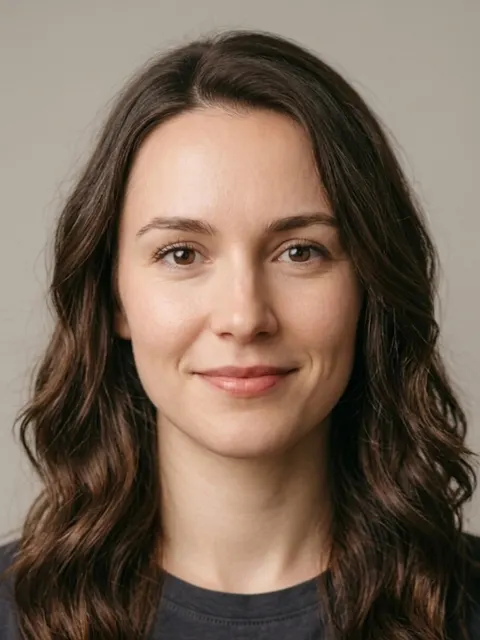
Deep side part with waves breaking below the jaw
A deep side part throws asymmetric width across the narrow forehead, and waves that begin under the cheekbone add fullness at the chin. The trick is timing the wave low so it never peaks at the widest point.
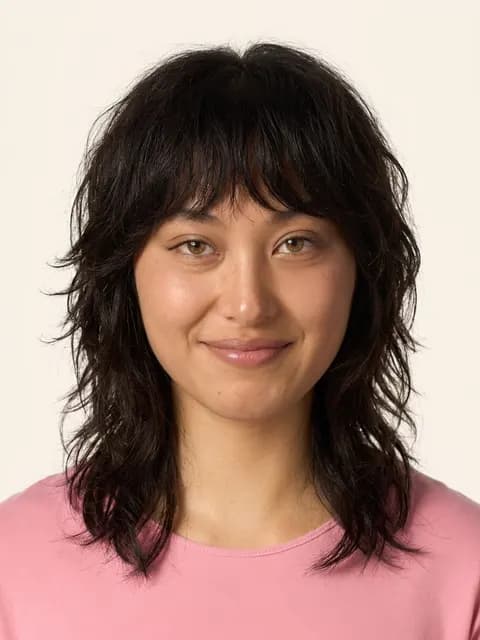
Shoulder-grazing shag with a fringe
The shag's stacked layers and built-in fringe widen the forehead and feather volume down around the jaw, framing standout cheekbones rather than piling more width on them.
Best Haircuts for Diamond Faces - Men

Textured French crop with a forward fringe
A textured, forward fringe adds visual width to the narrow forehead and breaks the angular top of the diamond, while the cropped sides keep the cheekbone slim.
Full or boxed beard
The single most effective lever for a diamond: a squared, slightly fuller beard adds breadth and squares off the narrow, pointed chin, filling the bottom of the diamond so the face reads more balanced.
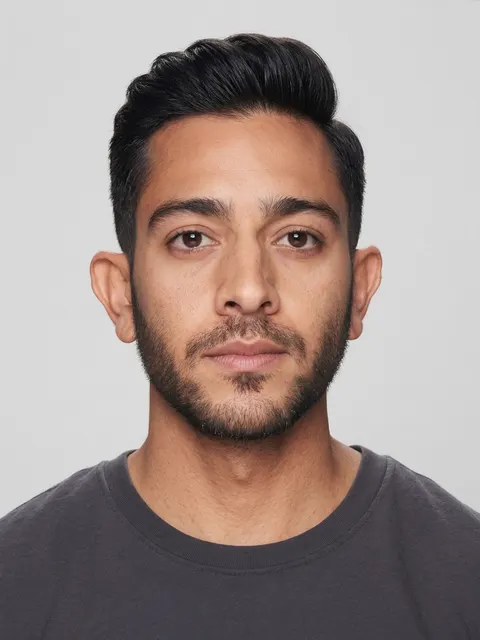
Side-swept textured quiff, moderate height
Builds the upper face with width and a little lift, drawing the eye up to a broader forehead rather than the cheekbones. Keep it textured and swept forward, not a slicked, fully exposed pompadour.
Mid-length textured crop with a low taper
A lower taper preserves some width at the temple and jaw where a diamond is narrow; a very high, tight skin fade strips that side width and leaves the cheekbone reading as the only wide point.
Caesar-style brushed-forward fringe with short stubble
Pairs a forehead-covering fringe with chin-widening stubble or a short beard, hitting both narrow zones at once - the male version of the bob-plus-bangs strategy.
By Hair Type
Straight / fine
Fine hair lies flat, so it won't manufacture the forehead and jaw width a diamond needs - build it in structurally with a blunt chin-length cut, a soft fringe, and root lift at the temples. The upside is that it won't over-inflate the cheekbone.
Wavy
The ideal diamond texture, since soft lateral movement reads as width. Shape it so the waves peak below the cheekbone and bloom at the jaw, and let a few pieces fall across the forehead; just avoid letting the wave crest at ear level.
Curly / coily
Curls bring plenty of width, but they naturally bloom at the widest point - the cheek. Grow enough length that the heaviest curl falls below the cheekbone, and let a curly fringe add the forehead breadth a diamond is missing.
Thick / coarse
Holds a fringe and a chin-length shape beautifully, but can pile bulk onto the cheekbone. Use internal layering or thinning at mid-face to slim the cheek, and keep the weight and movement down at the jaw and ends.
What to Avoid with a Diamond Face
- ✕Slicked-back ponytails and tight, scraped-back buns - they fully expose the narrow forehead and pointed chin, pushing the diamond angularity to its maximum.
- ✕Center parts on flat, sleek lengths - a center part visually narrows the already-narrow forehead, and the unbroken sheet of hair clings to and emphasizes the cheekbone.
- ✕Volume concentrated at the cheekbones - big mid-length curls, teased ear-level fullness, or bobs styled to flare at the cheek all pile width onto the one spot that's already widest.
- ✕A bare forehead with no fringe or face-framing pieces - leaving the narrow forehead and temples uncovered throws away a diamond's biggest balancing lever.
Frequently Asked Questions
What is the best haircut for a diamond face female?
A chin-length bob with curtain or side-swept bangs. It's the rare cut that solves a diamond's two-front problem at once - the fringe adds width to the narrow forehead while the chin-length ends build fullness at the jaw, so your cheekbones become a highlight instead of the only wide point. Collarbone lobs and textured pixies with crown volume are strong alternatives.
What is the best haircut for a diamond face male?
A textured crop or French crop with a forward fringe, paired with a fuller, squared-off beard. The fringe broadens the narrow forehead and the beard fills out the narrow, angular chin - together they balance the wide cheekbones from both ends. Skip very high, tight fades, which strip the side width a diamond actually needs.
What hairstyle suits a diamond face?
Any style that adds width at the two narrow zones - the forehead and temples, and the jaw and chin - without piling volume onto the cheekbones. Bangs, chin-length and below-the-cheekbone volume, and soft side-swept texture all work. The aim is to make the face read closer to an oval while still framing the standout cheekbones a diamond is known for.
Should a diamond face have bangs?
Yes - bangs are one of the most flattering moves for a diamond because the forehead is naturally narrow. Go for soft, wide styles like curtain bangs or a side-swept fringe that add breadth across the forehead and temples. This is the opposite of a heart-shaped face, where bangs are used to cover and reduce a wide forehead.
See These Cuts on Your Own Face
Your facial beauty report renders the most flattering hairstyles for your shape on your own photo - so you can see the cut before the salon chair.
Get my facial beauty reportPut it into action
Confirm your shape, then see the cut on your own face.
Hairstyle Finder
FreeDetect your face shape and get your matched cut list - free, in your browser.
All Face Shapes
The hub guide - flattering haircuts for every face shape in one place.
Get your facial beauty report
Flattering hairstyles rendered on your own photo, plus your shape, symmetry and a styling plan.
Glasses by Face Shape
The frames that flatter your shape - the companion eyewear guide.