The Best Eyebrow Shape for a Round Face
A round face is a set of curves - cheeks, jaw, hairline - with no strong vertical line. Brows are the one feature you can reshape in ten minutes to add one. The rule is short: arch, do not curve. This guide ranks the six brow shapes for a round face, gives the three-line mapping method, and covers men's brows, hooded eyes and the mistakes that quietly make a round face rounder. Not sure your face is round? Check it free from one photo.
Short Answer
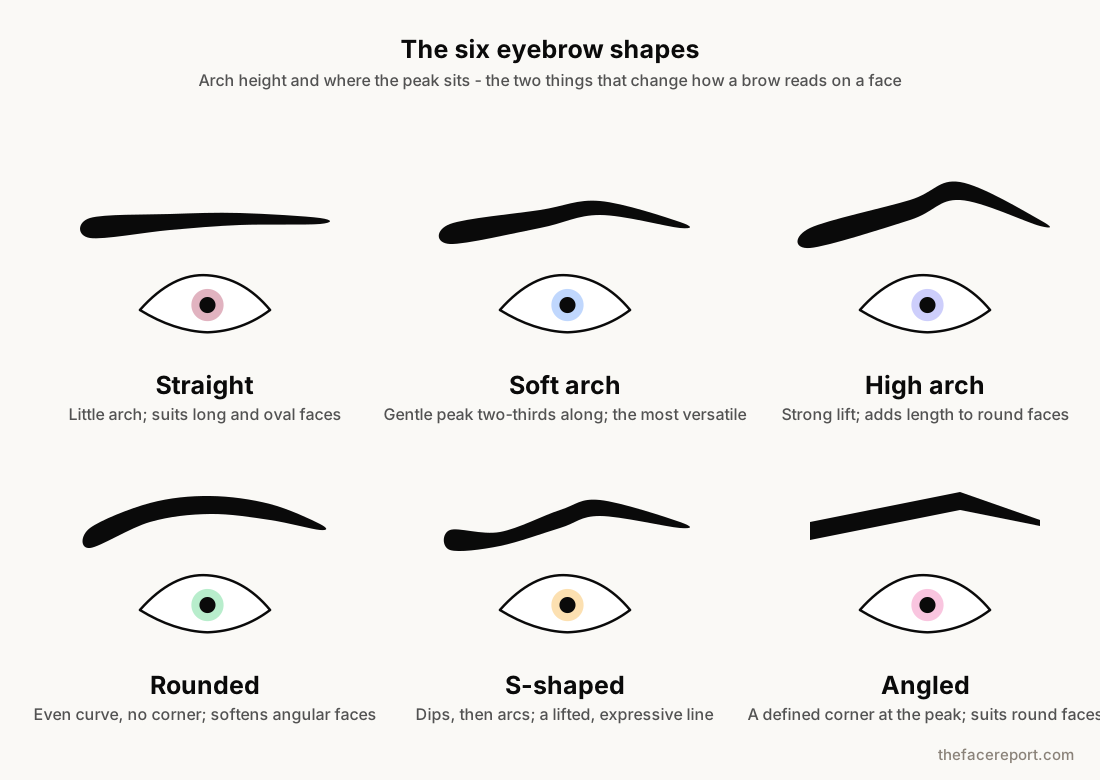
A soft or high arch with the peak two-thirds of the way along and a tapered tail that reaches past the outer corner of the eye. An angled brow works too. Avoid a rounded brow and be careful with a flat straight one: both add width, not length.
Six Eyebrow Shapes, Ranked for a Round Face
High arch
BestThe peak lifts the eye area and adds a vertical line where a round face has only curves. It is the single strongest way brows change how a round face reads - the arch draws the eye up, so the face looks longer and the cheeks less wide.
Soft arch
BestThe same lift with less drama: a clear peak about two-thirds of the way along, rising gently. The safest everyday choice for a round face and the easiest to maintain at home.
Angled
GoodA defined corner at the peak introduces a straight edge. On a round face that contrast reads as structure; keep the angle crisp but not severe, and keep the tail slightly longer than the head so the line does not look short.
S-shaped
FineWorks when the brow naturally dips before it rises; the lift at the arch still helps. Do not manufacture the dip by removing hair from the head of the brow - that widens the gap between the brows, which widens the face.
Straight
Use with careA flat brow adds horizontal width and no lift, which pushes a round face rounder. It suits long faces for exactly that reason. If your natural brow is straight, keep the tail slightly raised rather than fighting the whole shape.
Rounded
AvoidA brow curved with no corner repeats the curve of the cheeks and jaw, so the face reads as a set of circles. It is the shape most round faces are born with and the one most worth reshaping toward an arch.
How to Map Your Brows (Three Lines, One Pencil)
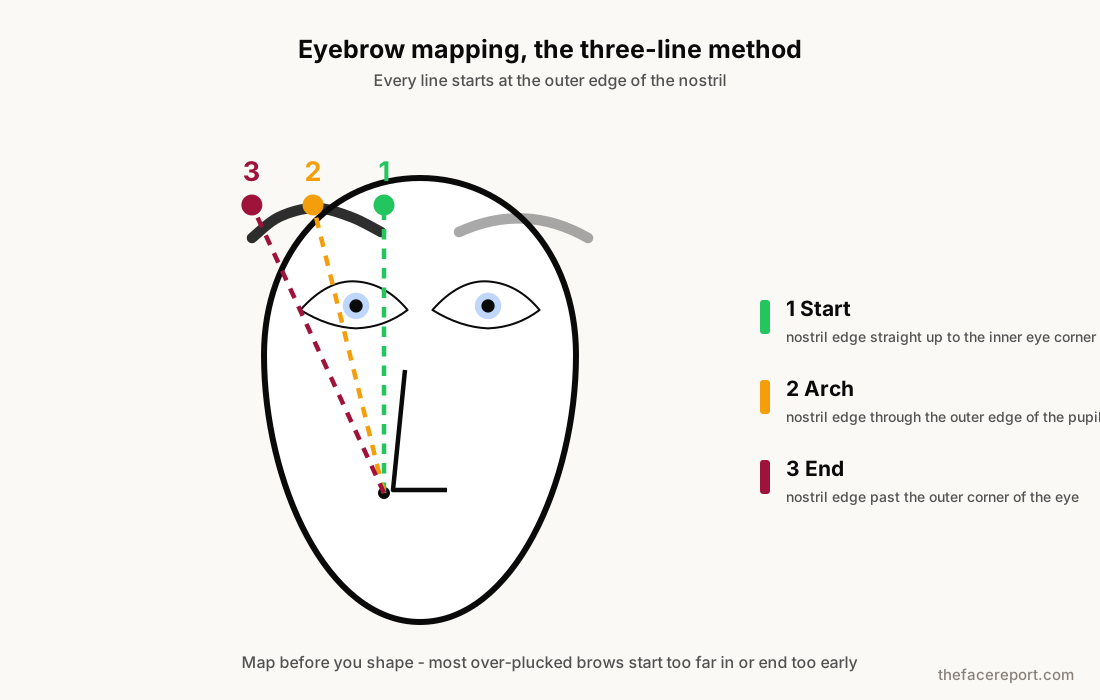
1. Start
Hold a pencil vertically against the outer edge of your nostril. Where it crosses the brow is where the brow should begin.
Why it matters on a round face: Starting further in narrows the gap between the brows and pulls the eyes together; starting further out widens the face. On a round face, err a hair further in rather than out.
2. Arch
Angle the pencil from the nostril edge through the outer edge of your pupil while looking straight ahead. The peak of the arch sits on that line.
Why it matters on a round face: This puts the highest point about two-thirds along the brow, which is where a lift reads as elegant rather than surprised. Peaks placed further in look angry; further out, droopy.
3. End
Angle the pencil from the nostril edge past the outer corner of the eye. The brow should extend at least to that line.
Why it matters on a round face: A tail that stops short leaves the outer face unframed and makes the face look wider. Round faces benefit from a slightly longer tail, tapering to a fine point and not dropping below the level of the head of the brow.
Men's Eyebrows and a Round Face
Same geometry, lighter hand. Keep the natural thickness - a thinned brow reads as groomed and loses the line that gives a round face structure. Remove only the strays between the brows and below the natural lower edge, and let the outer third sit a fraction higher than the head so the brow has a subtle angle rather than a curve. No visible arch, no shaped top edge. If the brows are very round, a barber can straighten the lower edge with a trimmer in thirty seconds; that single straight line does more for a round face than any product.
Four Mistakes That Make a Round Face Rounder
| Mistake | Effect | Fix |
|---|---|---|
| Over-plucking the head of the brow | Widens the space between the brows, which reads as a wider face. | Map line 1 and remove only hairs on the nose side of it. |
| Rounding the arch while tidying | Turns an arch back into a curve that echoes the cheeks. | Tidy from below only; leave the top line alone. |
| Cutting the tail short | Leaves the outer face unframed and emphasises cheek width. | Map line 3; grow or pencil the tail out to it. |
| Placing the arch too far in | Reads as tense or surprised, not lifted. | Map line 2 through the outer edge of the pupil, not the centre. |
Frequently Asked Questions
What is the best eyebrow shape for a round face?
An arched brow - high arch if your features can carry it, soft arch for everyday - with the peak about two-thirds of the way along and a tapered tail that extends past the outer corner of the eye. The arch introduces a vertical line and a lift into a face made of curves, which is what makes a round face read longer. An angled brow with a crisp corner does the same job with a sharper look.
Should round faces have arched or straight eyebrows?
Arched. Straight brows add horizontal width and no lift, which is why they suit long faces and work against round ones. If your natural brow is straight, do not try to force a high arch - keep the tail slightly lifted and the line clean, which reads as a soft arch without removing much hair.
Should my eyebrows be thick or thin if my face is round?
Medium to full. Thickness itself does not change the perceived face shape much; the arch and the tail length do. Very thin brows lose the vertical line an arch provides, so keep natural density, taper toward the tail, and spend your effort on the shape of the top edge rather than on removing hair.
What eyebrow shape suits a man with a round face?
The same geometry, less shaped: keep natural thickness, remove only strays between the brows and below the natural line, and let the outer third sit slightly higher than the head so there is a subtle angle. Do not thin the brow or create a visible arch - the goal is a straight-to-slightly-angled line with a clean lower edge, which adds structure to a round face without looking groomed.
How do I map my eyebrows for a round face?
Three lines from the outer edge of the nostril: straight up to find where the brow starts, through the outer edge of the pupil to place the arch, and past the outer corner of the eye to find where the tail ends. For a round face, place the start a hair further in, keep the arch on the pupil line rather than further in, and extend the tail all the way to the third line.
Can eyebrows really change the shape of your face?
Not the bone, but the perception - and perception is what a face shape is. Brows are the strongest horizontal line on the upper face; where their peak sits and how far the tail extends changes where the eye is drawn and how long the face reads. It is the cheapest, most reversible face-shape lever there is, which is why brow shaping comes up in every face-shape guide.
How do I know if my face is actually round?
A round face is about as wide as it is long, with the widest point at the cheeks and a soft jaw with no corners. If your face is clearly longer than wide it is oval or oblong; if the jaw is as wide as the cheeks with corners it is square. Our free face shape detector measures those proportions from one front photo and tells you which of the six shapes you have - and links to the brow, glasses and hairstyle guides for it.
What if I have hooded eyes and a round face?
Prioritise the arch and keep the brow's lower edge clean and slightly higher than you might otherwise, so the fold does not swallow the space between brow and lash line. Avoid heavy, low brows - they close the eye. See the hooded eyes guide for the eye-specific detail.
Confirm Your Face Shape First
Round, oval and square get different brow advice. The detector measures your width, length and jaw from one photo and tells you which you are - free, in your browser.
Find My Face Shape FreeThe rest of the round-face playbook
Brows, hair and frames all pull in the same direction: add a line, add length.
Face Shape Detector
FreeRound, oval, square, heart, diamond or oblong - measured, not guessed.
Eyebrow Mapping Tool
FreeThe three pencil lines drawn on your own face, with each brow's offset in millimetres.
Hairstyles for a Round Face
The cuts that add length, and the ones that add width.
Glasses for a Round Face
Frame shapes that give a round face angles.
Hooded Eyes Guide
Brow and liner placement when a fold covers the lid.